
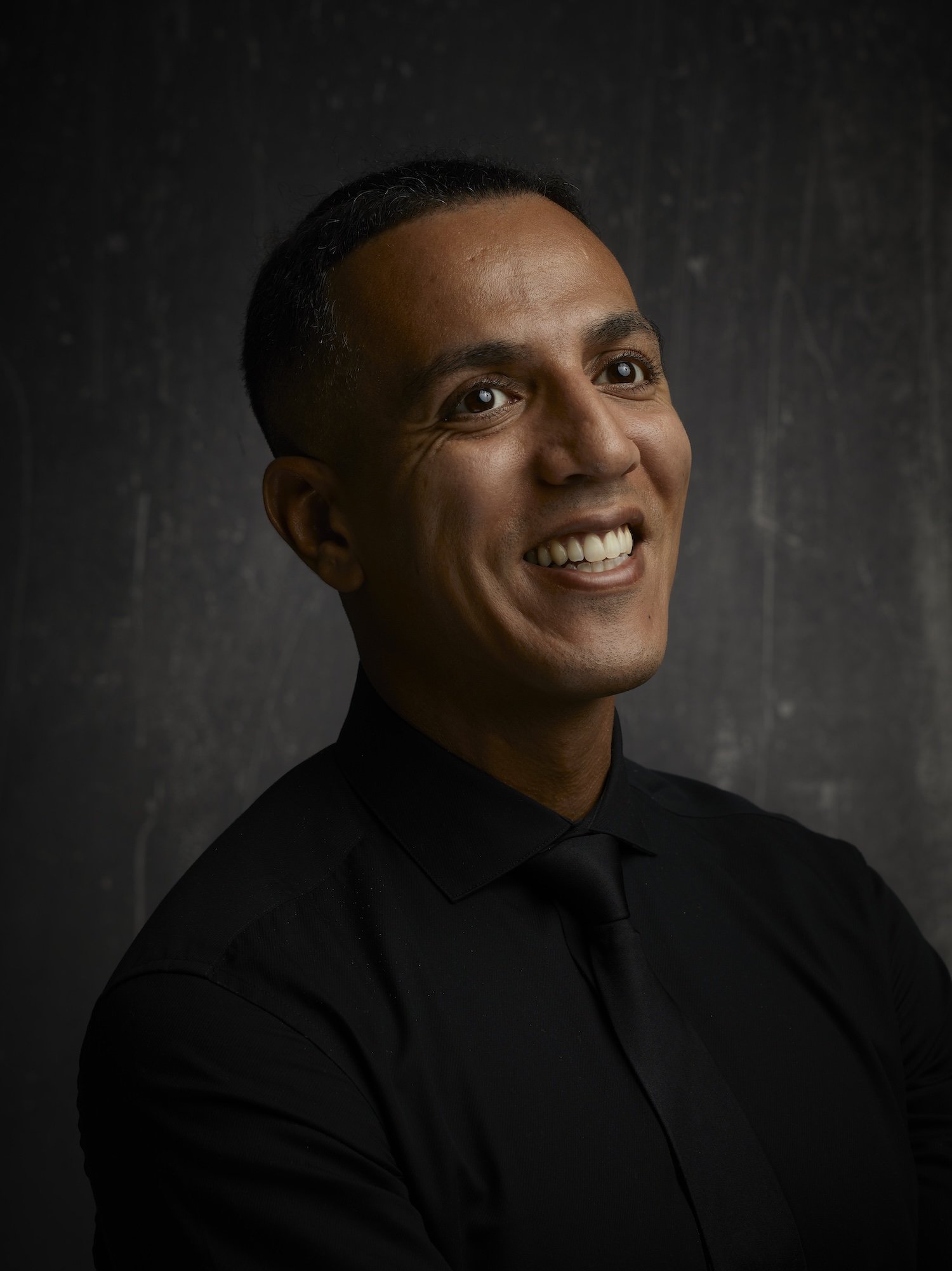
The Artist
James Issam Mengad
A photographer working in color, between the cultures I was raised inside and the cities I have lived through.
Where I Come From
Two homes, one eye
I was born and raised in Montreal — a cosmopolitan and culturally diverse environment. Not only multicultural but, as I always say, intercultural: people from different walks of life who were also interested in cross-pollinating their cultures through the cultures of others.
My family is from Morocco. I spent whole summers going back, exposed to a very dense and culturally rich environment. My best friends were Syrian, Peruvian, Haitian, Greek, Italian. Outside our doors we all carried a strongly-identified Montreal French-Canadian identity. But the moment you stepped inside the household, it would become Moroccan. It would become Syrian. We experienced the culture and the food of each other's parents on weekends and holidays.
That upbringing became the training. It gave me an eye for something that is not part of the common — and, more importantly, when I step outside my normal environment, an eye to identify what makes an area interesting because of its details.
How I Photograph
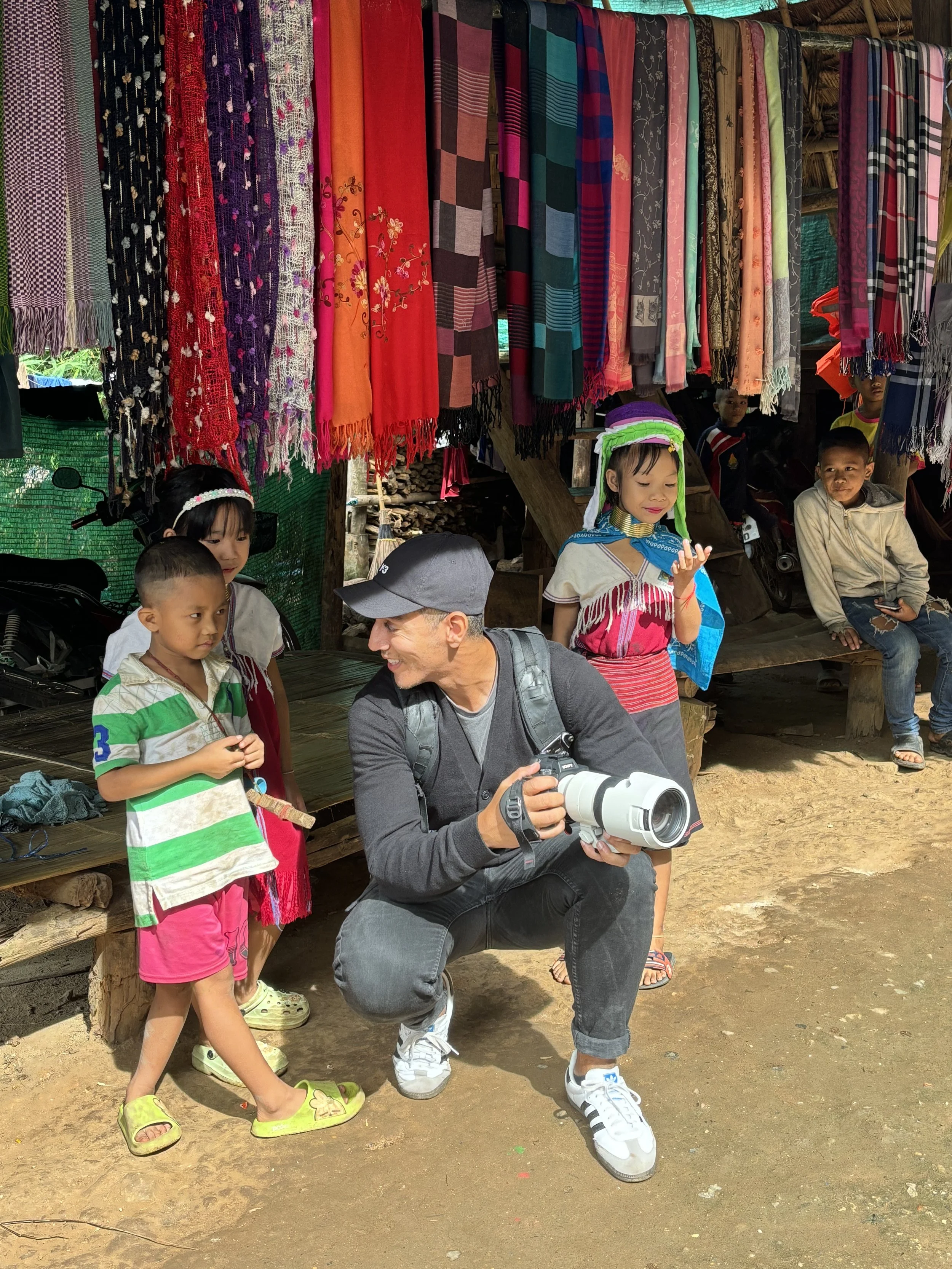
Slowly, on invitation.
The one thing about my style that fellow photographers tend to recognise is the colour. Colour theory, and the hues and vibrance I use to enhance deliberately selected parts of a frame. I do not photograph in black and white as a matter of practice. I photograph in the colour of the place, and I let the colour do more of the work than most photographers do.
The rest is patience. I go in slowly. I introduce myself. I chit-chat. I sit down before I photograph. When the shot comes, I am close enough that we can see the ear of the person next to me in the foreground. That closeness is not a technique. It is what an hour of talking earns.
My advantage is not access. My advantage is that I was raised to see what people who live inside a place have stopped seeing. You are from Hong Kong — for you, the bamboo scaffolding on a building is normal. To me, it does not exist anywhere else in the world. When I return to New York after time in Asia, I pay attention to things that were once normal to me: the metal fire escapes, the red brick walls, the neon signs on the front of a pub. All of it is blended into daily life. All of it defines the culture. And all of it is easy to walk past.
What I Am Doing This For
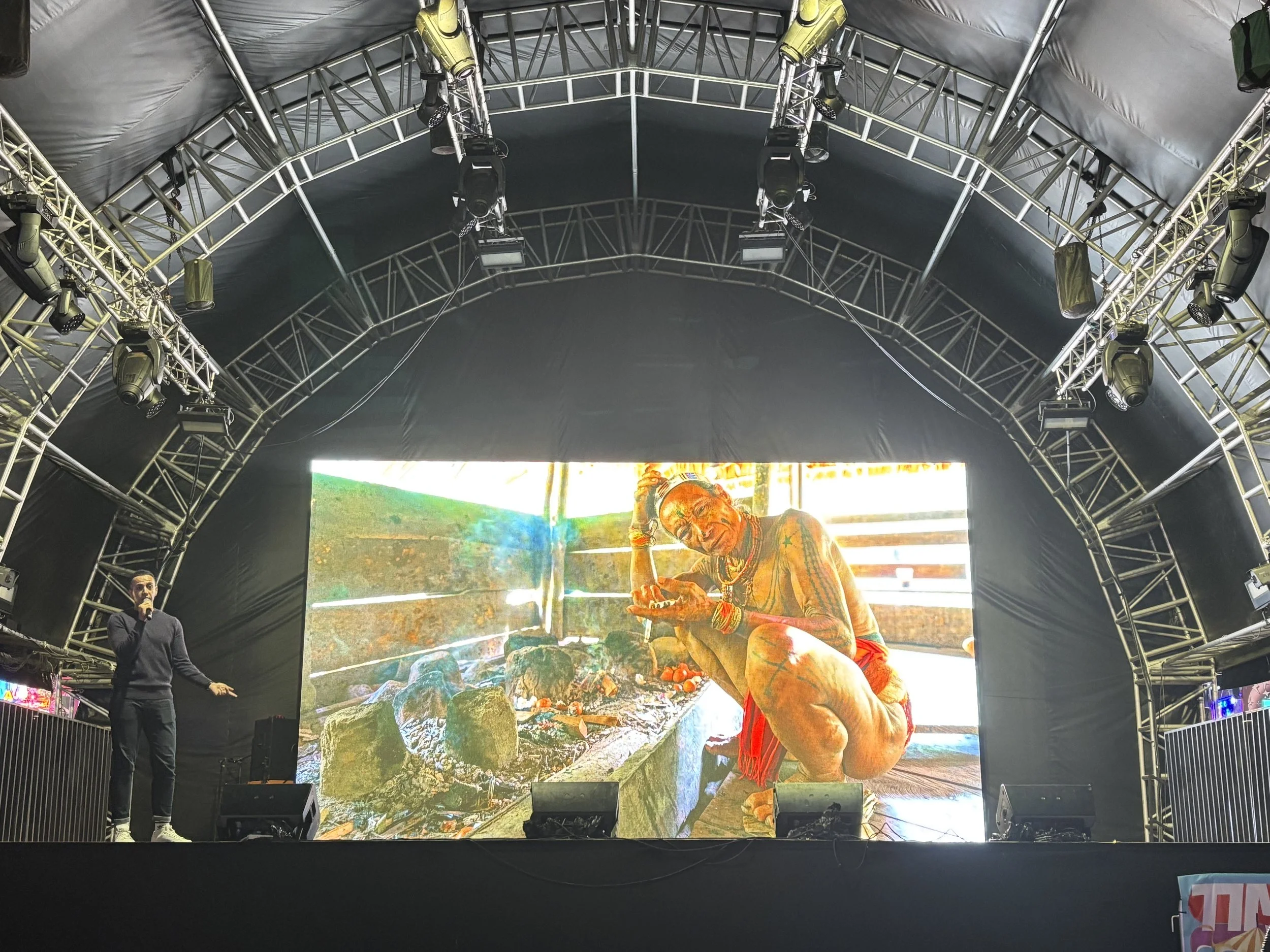
Held before the moment shifts.
I photograph, in the main, the things that are subject to disappearing. The communal wood-fire ovens of Morocco, quietly closing as women enter the workforce and industrial baking takes over. The Cantonese opera, which will survive only as long as the performers who still know the songs. The Saigon I photographed in 2021, and which by 2026 already has a new bridge, a metro, and a skyline that did not exist then.
Both cultures and cities are, at this moment, standing in front of you. Both will be different tomorrow. This is why my work moves between people and places, between the field and the city. It is the same eye looking at the same problem: what is here now, and what is worth holding.
The studio has been working quietly for ten years. In 2026 it opens for the first time to collectors, trade partners, and licensing. If you are here at the beginning, we are building this together.